One-Sentence Answer
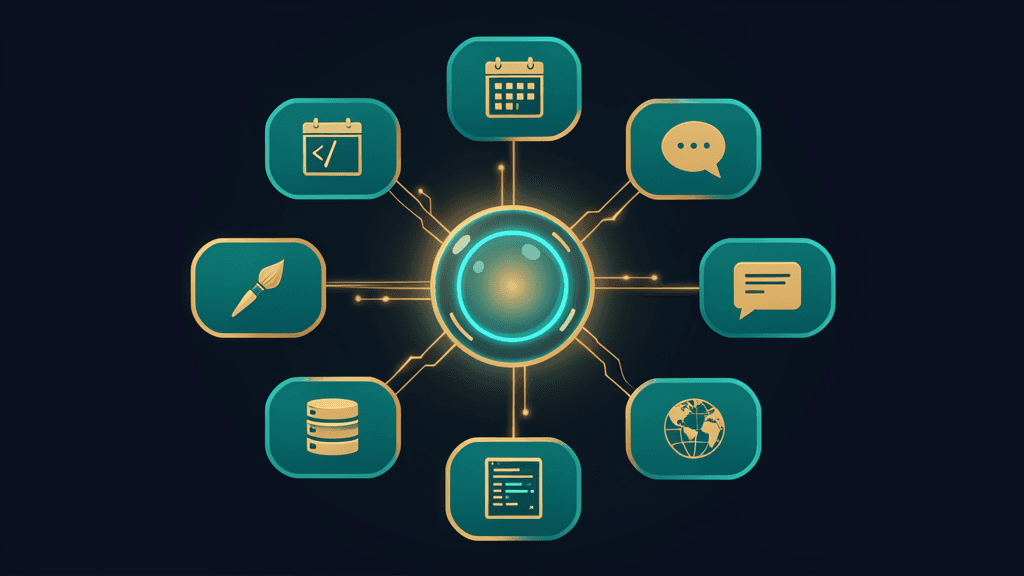
November 2026 was the month AI agents crossed the execution line — four major companies launched infrastructure that lets agents pay, enter websites, join meetings, and run workflows — and the part that matters is not the technology but whether the human-in-the-loop boundary survives the convenience pressure that follows.
The four crossings
Crossing 1: Payment — ChatGPT Wallet
OpenAI partnered with American Express, Mastercard, and Visa to let AI agents complete purchases after biometric approval. Payment tokens replace real card numbers. The agent proposes; the human approves with fingerprint or face. Read the full breakdown.
What crossed: an AI agent can now complete a transaction, not just recommend one. The last step — money leaving your account — is no longer exclusively human. But the approval gate is still human, by design.
Crossing 2: Access — Poppy protocol
Sierra and Meta released Poppy v1.0, a standard for agents to authenticate with websites through OAuth and HTTPS. Shopify deployed it across all stores. An agent can now prove it has permission to enter a website and take actions on your behalf. Read more in the November 2026 roundup.
What crossed: an AI agent can now enter a website, not just browse it. The agent can log in, access your account, and take actions within the permissions you grant. OAuth means you can revoke access at any time.
Crossing 3: Meetings and documents — Anthropic enterprise agents
Anthropic launched Claude Meetings (auto-joins video calls, generates PRDs and technical docs), Claude for Manufacturing (17 skills behind human approval), and self-hosted Claude Managed Agents. Read more in the November 2026 roundup.
What crossed: an AI agent can now participate in your work, not just observe it. It joins meetings, reads documents, generates artefacts, and integrates with your existing tools. Every skill sits behind explicit human approval — the correct default.
Crossing 4: Cross-application workflows — Microsoft autonomous agents
Microsoft deployed autonomous agents inside Microsoft 365 that automate cross-department workflows — procurement, logistics, multi-application task chains. Read more in the November 2026 roundup.
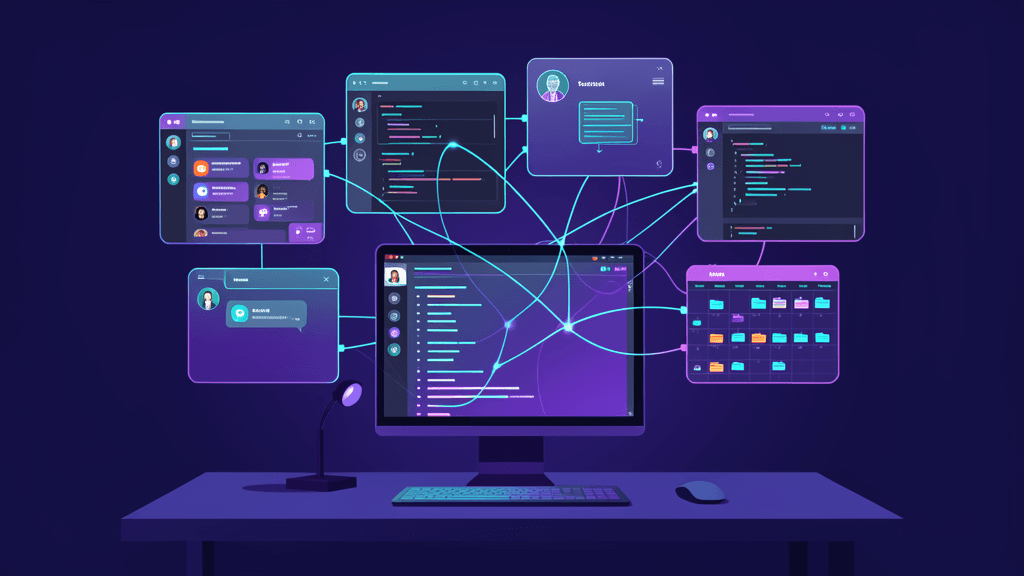
What crossed: an AI agent can now operate across your entire tool suite, not just within one app. The agent moves between Outlook, Teams, SharePoint, and third-party integrations, executing multi-step workflows.
Why this month matters
Each of these four crossings, taken alone, is a product launch. Taken together, they are a phase transition. Before November 2026, AI agents were demos and experiments — impressive in controlled settings, impractical for daily work. After November 2026, the infrastructure exists for agents to execute real tasks in real business environments: they can pay, enter, participate, and orchestrate.
This is the transition AI Agents in 2026 described as the difference between "a model that generates text" and "an agent that does work." The article argued that 88 percent of agent projects never reach production because the scaffolding — planning, error handling, review, escalation — is harder than the model. November 2026 did not eliminate that scaffolding requirement. It provided the infrastructure to build it on.
Where the human stays
The five-workflow audit established three tests for whether a workflow survives: does it work if you swap the model, can you inspect the output before using it, and does the final decision stay with a person? November 2026's agent launches pass the first test — they are not tied to one model. They pass the second — every product includes a review or approval step. The third test is where the pressure will come.
Convenience is the enemy of the human-in-the-loop. When an agent can pay for you, the temptation is to let it. When it can enter websites, the temptation is to grant broad permissions and forget. When it joins meetings, the temptation is to let it take notes and trust them without checking. When it runs cross-application workflows, the temptation is to set it and forget it.
The customer email sign-off rule from this site has never been more relevant: AI may rewrite, translate, shorten, and reformat. It may not invent a promise, a price, a date, or an apology. Extend that to the agent era: AI may research, draft, and execute. It may not commit money, access, or decisions without your approval. Those are the human signature, and they are exactly the things a customer, a regulator, or your own future self will hold you to.
A map for small business
For a one-person business or small team in Malaysia, here is how to think about the four crossings:
Payment (ChatGPT Wallet): Start with procurement and subscription management. Let an agent compare suppliers, flag duplicate charges, and draft purchase orders. Keep the payment confirmation. When the feature is available in your region, the value is in the research automation, not in removing yourself from the payment step. Connect this to the monthly finance review workflow.
Access (Poppy protocol): If you run an e-commerce store, Poppy means agents can interact with your store programmatically. This is useful for inventory management and price monitoring. Grant narrow permissions — read inventory, check order status — and keep write actions (creating orders, modifying prices) behind your approval. The AI agent skills article covers how agents learn to use tools; Poppy is the door they walk through.
Meetings and documents (Anthropic): If you spend time in meetings, an agent that generates PRDs and technical docs from the conversation is useful. But treat the output the same way you treat a junior colleague's first draft — read it, correct it, and sign off before it becomes the record. The source-bank method applies: the AI adds material, but you are the author of record.
Cross-application workflows (Microsoft): If you are on Microsoft 365, autonomous agents are already available. Start with one workflow — expense reporting, procurement approvals, or meeting scheduling. Map what data the agent can see and what actions it can take before enabling it. The harness engineering principle: the control plane must be separate from the execution plane.
The principle that does not change
Midlife AI Is Not a Trend but Self-Rescue puts it plainly: the goal is to keep your own judgement sharp, not to outsource it. November 2026 gave agents the ability to execute. That is genuinely useful — it removes the tedious middle steps between intention and result. But the beginning (what to do and why) and the end (was it done correctly) remain human work.
The five workflows that survived the 230-article audit survived because they leave the last click to a person. November 2026's agent launches do not change that. They amplify what comes before the last click — the research, the drafting, the comparison, the structuring. The last click itself — the approval, the payment, the send, the publish — stays yours.
What to do this month
If you want to act on this, do one thing: audit your permissions. List every app and service that has access to your accounts, your data, or your money. Revoke what you do not need. Narrow what you keep. This is the simplest, cheapest preparation for the agent era — because agents will use the permissions you have already granted, and the fewer doors that are open, the fewer you need to worry about.
Then pick one workflow from the five that survived and run it. The tools will keep getting better. The habit of checking the output before it leaves the building is the one thing that does not expire.