Introduction
At the end of June 2026, the artificial intelligence landscape witnessed a surge of monumental releases. From OpenAI’s quietly tested GPT-5.6 to the regulatory clearance of Anthropic’s Claude Mythos, and ByteDance’s pioneering Seedance 2.5 video generator, AI technology is shifting from text outputs to cohesive multimodal workflows and ultra-fast real-time streaming.
This article breaks down these breakthroughs and explains what they mean for the future of developers, creators, and industries.
Core Highlights & Deep Dive
1. OpenAI’s Private Preview: The GPT-5.6 Lineup
OpenAI has initiated a private preview of its next-generation GPT-5.6 models for select trusted partners. This release emphasizes enhanced cybersecurity features, advanced agentic reasoning, and a hardened safety stack coordinated with federal agencies.
The GPT-5.6 lineup is structured into three tiers:
- Sol: The flagship model designed for deep mathematical reasoning, cybersecurity analysis, and complex code refactoring. It excels on
Terminal-Bench 2.1, which measures command-line pipeline execution. - Terra: The mid-tier general-purpose model, balancing cost and performance for typical business automation tasks.
- Luna: A highly optimized lightweight model meant for high-speed, cost-efficient chat and everyday utility.
2. Regulatory Bans Lifted: Anthropic’s Mythos 5 & Fable 5
The export and access restrictions on Anthropic's high-tier models have officially been lifted. Consequently, two models are making headlines:
- Claude Mythos 5: Anthropic's gated model specialized in offensive and defensive cybersecurity simulation. It is only accessible to vetted institutions via Project Glasswing.
- Claude Fable 5: The public, fully safeguarded commercial release based on the Mythos 5 architecture. It is now open to enterprise customers and individual developers. Pricing is set at $10 per million input tokens and $50 per million output tokens.
3. ByteDance Double Release: Seedance 2.5 & Seed 2.1 Pro
During the FORCE conference, ByteDance's Volcano Engine showcased two major updates targeting media production and high-efficiency intelligence:
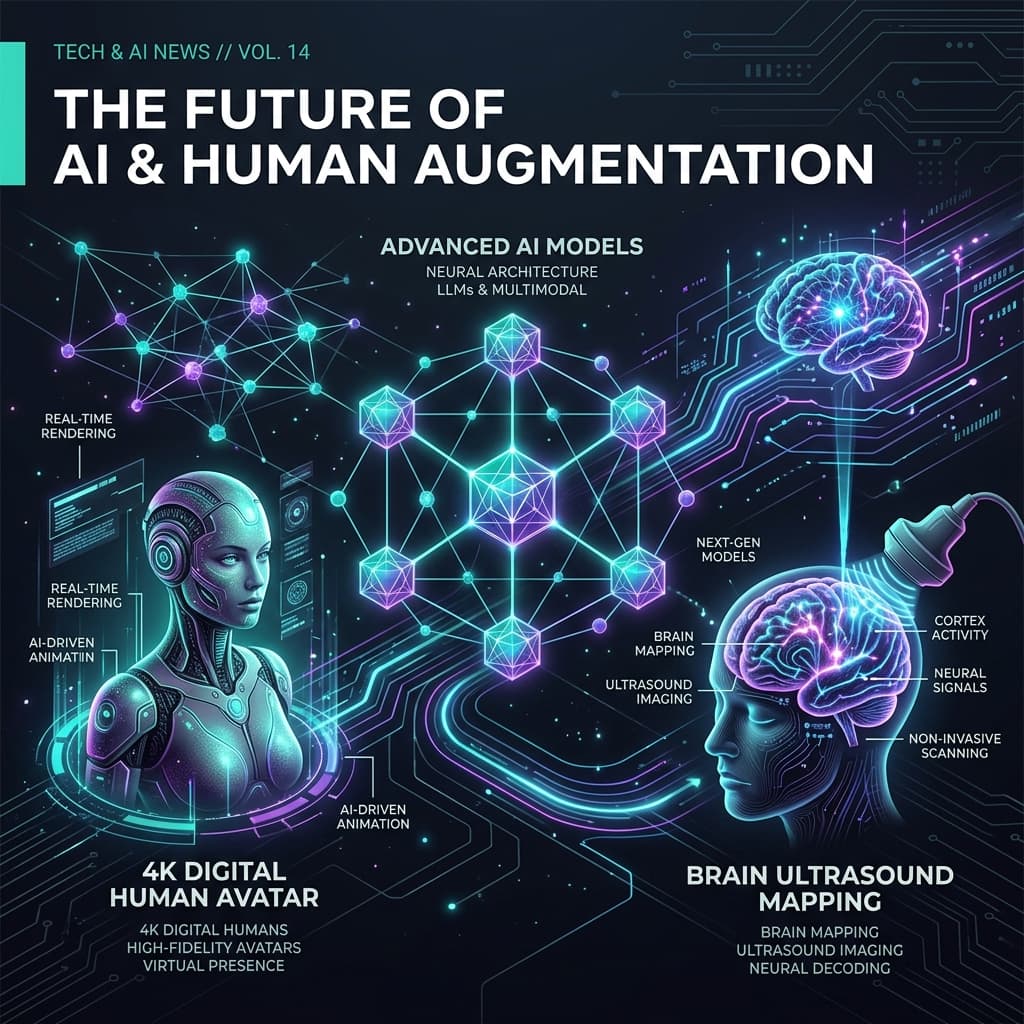
- Seedance 2.5 Video Model: Solves the 15-second visual clip limit by natively outputting 30-second continuous camera pans and sequences. Outputting in 4K resolution with 10-bit color, it accepts up to 50 multimodal reference files (images, audio clips, text scripts) to guarantee near-flawless stylistic and character consistency.
- Doubao-Seed-2.1-pro: A cost-effective, reasoning-heavy agentic LLM. It focuses on autonomous debugging and self-repairing code, offering competitive reasoning scores at a fraction of the operating cost of US frontier models.
4. Real-Time Avatars: Alibaba’s Wan-Streamer v0.1
Alibaba, in partnership with the Wan development team, has open-sourced Wan-Streamer v0.1. This is a unified, end-to-end foundation model for ultra-low-latency real-time voice and video streaming.
Rather than stacking separate models for speech-to-text (ASR), text-processing (LLM), and speech-to-video, Wan-Streamer runs a single, cohesive Transformer:
- Sub-200ms Latency: Achieving model-side latency under 200 milliseconds enables smooth, natural, full-duplex conversations.
- Edge Optimization: It can be run on high-end consumer hardware and edge devices, paving the way for instantaneous virtual assistants and interactive digital companions.
5. Medical Tech & Hardware: Brain Ultrasound and Nano Stack
Two auxiliary hardware innovations were highlighted:
- Non-Invasive Brain Ultrasound: A helmet-like neuro-stimulation device that uses microbubbles and AI-targeted ultrasound waves to stimulate deep-seated neural regions. It holds promise for non-invasive therapies for diseases like Parkinson's.
- IBM’s Sub-1nm Nano Stack Architecture: Introduces vertical transistor stacking to increase chip density. This hardware evolution will supply the processing power required for the next wave of on-device AI agents.
Conclusion & Outlook
The releases of mid-2026 prove that AI progress is no longer just about raising benchmarks in language processing. The real differentiators are multimodal coherence (such as 30s 4K video clips), ultra-low latency interactions (200ms streaming), and releasing powerful logic engines under robust safety and regulatory frameworks. Mastering and pairing these building blocks will be essential for building next-generation digital businesses.