One-Sentence Answer
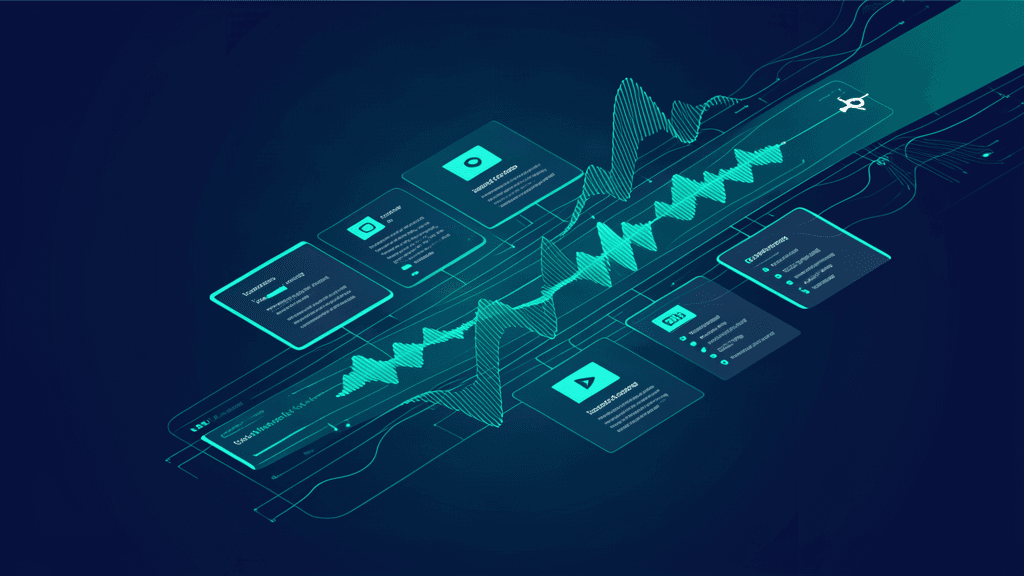
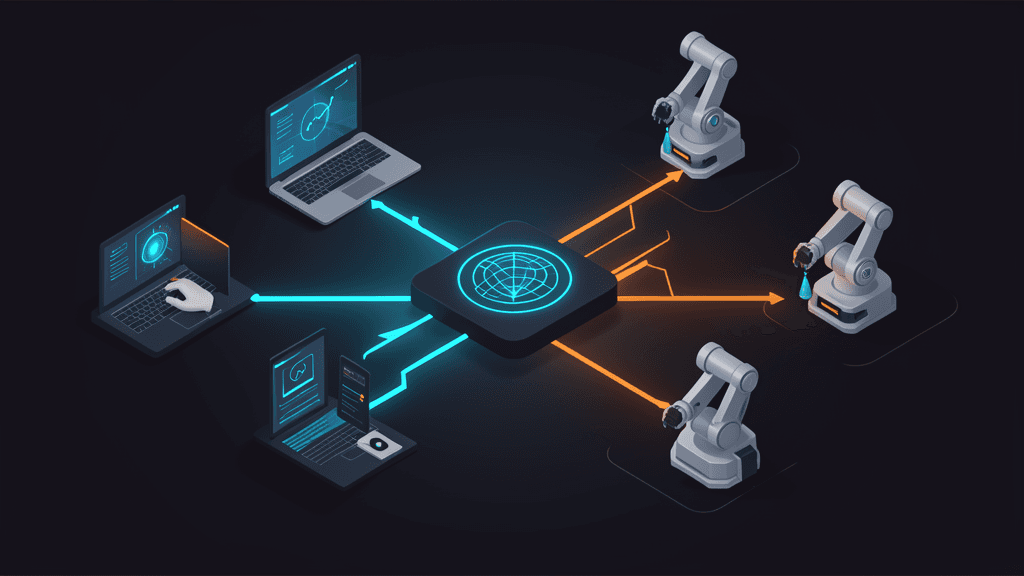
FLUX 3 is Black Forest Labs' answer to the question of whether one foundation model can do everything — generate photorealistic images and videos, produce synchronized audio, and predict robotic actions all from a single backbone. The FLUX-mimic project with mimic robotics shows it working on real factory robots at Audi.
A Foundation Model That Understands Physical Reality
When FLUX 3 was first announced, the focus was on multimodal content generation — images, video, and audio produced by a single architecture. But the real breakthrough buried in the research paper is less flashy: video is what teaches a model about how the world behaves.
To generate realistic video, a model must learn contact, motion, weight, cause and effect. Get any of those wrong, and the video looks wrong. There is no shortcut. By forcing a model to learn these dynamics during training, FLUX 3 absorbed a representation of physical reality — and that representation turns out to be decodable into robot actions.
As BFL puts it:
"If one model does both [generating pixels and controlling robots], it was never really only a content creation model. It is a model of how the world behaves, and content creation is one thing one can do with it."
That framing changes everything. The industry has treated visual generation and Physical AI as separate problems requiring separate models. FLUX 3's thesis: they're the same underlying capability, just decoded differently.
Why Video Is the Hard Part (and the Key)
Audio is comparatively simple — low dimensional, accounting for less than 0.5% of tokens in a 720p video. Once a model has learned visual understanding, it naturally picks up causal relationships between video and audio: lip-synced speech, sound effects matched to physical events.
But video? To predict the next frame accurately, the model must understand:
- How objects move through space over time
- How gravity and momentum work
- What happens when things touch or collide
- How materials deform, stretch, or break
That's not rendering — that's world simulation. And a world model, once it understands causality, can be queried in multiple ways: render a pixel frame, or output an action vector for a robot's joints.
Video prediction accounts for over 95% of FLUX 3's total compute costs. It's the hardest modality, which is precisely why it's the most valuable. The model doesn't learn video because we want it to generate clips — we make it learn video because only that level of training produces a representation useful for anything else.
How Action Prediction Fits Into the Same Backbone
The integration story is instructive. When BFL added action prediction to FLUX 3's training curriculum, they observed what looked like a temporary regression:
- Human ratings on text-to-video dropped by up to 10% initially
- After roughly 3,500 additional steps, quality recovered past baseline
- From that point on, the model could both generate video and predict actions
There was no permanent capacity trade-off. The model simply had to learn how the new action modality related to its existing world model. Once that mapping was figured out, everything coexisted.
This is a direct challenge to the prevailing approach in Physical AI, where researchers typically take a frozen vision-language model and bolt on an action decoder. FLUX-mimic does something more elegant: it trains a lightweight action decoder on intermediate features extracted from FLUX 3's video prediction path itself. The action decoder learns from features that were already structured to represent world dynamics.
Self-Flow: The Training Methodology Behind It All
FLUX 3 is built on Self-Flow, BFL's unified framework combining generation and representation learning. The idea is straightforward but powerful: improved representations within a generative model should improve generation quality (the world model becomes more accurate), while better generation should improve representation quality (the features become more disentangled and decodable).
BFL's benchmark comparing Self-Flow against standard Flow Matching showed:
- Lower generation error across video, image, and audio modalities
- Higher success rates on robot manipulation tasks after fine-tuning
- The improvements went hand-in-hand rather than trading off against each other
The result: FLUX-mimic's action decoder outperforms previous vision-language-action models even with a completely frozen FLUX backbone — a setting where competing approaches fail entirely. Fine-tuning the backbone further pushes it to state-of-the-art.
From Lab to Factory Floor
This isn't a simulation exercise. mimic deployed FLUX-mimic on real robots running actual Audi production tasks:
- Kitting parts into structured trays
- Inserting electronic control units into tight-fitting fixtures
- Assembling components together
- Handling soft, flexible materials like seals and cables — tasks conventional automation has never been able to touch
The last one is particularly significant. Soft-body manipulation has been an unsolved problem in industrial robotics for decades. Conventional automation fails here because there's no rigid geometry to exploit. A model that has learned world dynamics from video can reason about material deformation intuitively — where rule-based systems hit a wall.
Audi Production Lab's Christoph Schneider put it bluntly:
"We have seen these robots solve complex soft-body manipulation work that would have been simply impossible with conventional robotics."
Sample Efficiency: Less Data, Faster Learning
One of the most practical takeaways for developers and robotics engineers: FLUX-mimic reaches a given success rate in half the training steps compared to video models without Self-Flow. The better the world representation, the less demonstration data you need.
Combined with mimic's reported 10x sample efficiency improvement over vision-language-action models, FLUX-mimic stacks these gains multiplicatively — not additively. This matters because collecting real-world robot demonstrations is expensive, tedious, and often dangerous. If you can do it in 1/20th the data, the economics of robot training change dramatically.
The model also exhibits natural failure recovery: a robot that misses a grasp corrects itself and tries again, using behavior never explicitly demonstrated. This kind of emergent robustness comes from having a deep world model rather than memorized task sequences.
Latency: Fast Enough to Actually Act
Factory deployment imposes a hard constraint — the model has to move as fast as the physical world. FLUX-mimic achieves:
- Under 80ms from input to world representation (single NVIDIA RTX 5090)
- 101ms end-to-end system reaction time with full optimization
- Comparable to human visual reaction time
The 80ms backbone figure alone might sound impressive until you realize the full stack — sensor reading, inter-process communication, action decoding, actuation — adds significant overhead. mimic's optimizations span the entire pipeline: cutting inter-process latency, real-time chunking so prediction and execution overlap, and custom action decoder tuning. The result is a self-contained system that doesn't stutter or jitter during operation.
What This Means for AI Content Creation
The narrative arc BFL is drawing is deliberate: content creation and physical AI are two outputs of the same foundation model. One generates pixels; the other generates joint commands. But they share the same backbone, the same world understanding.
For people building with generative AI today — whether creating video content, producing product imagery, or designing interactive experiences — the implication is worth sitting with. The models getting better at generating media are simultaneously getting better at understanding reality. And that understanding flows bidirectionally: better world models make better content (more physically plausible generation), and being forced to generate content makes better world models (by demanding causal reasoning).
This convergence suggests the tooling and techniques you learn for visual generation will increasingly transfer to applications you might not currently associate with them.
Quick Comparison: Where FLUX-mimic Stands
| Capability | FLUX-mimic | Previous VLA Models | Traditional Automation | |---|---|---|---| | Backbone training | Joint multimodal (image+video+audio+actions) | Vision-language frozen, action decoder added on top | Rule-based programing | | Soft-body handling | Yes (demonstrated in production) | Unreliable | No | | Frozen backbone performance | Outperforms competitors | Baseline | N/A | | Reaction time | 101ms end-to-end | Variable (typically slower) | Real-time but rigid | | Sample efficiency | 10–20x better than prior approaches | Baseline | Requires full reprogramming | | Physical plausibility | Learned from video dynamics | Learned from images only | Hard-coded |
Extending the Reading
- FLUX 3 Blog Post — the original multimodal foundation model announcement
- Self-Flow Research — the unified generation + representation training framework
- mimic Robotics — the company building the full-stack robotics deployment
- mimic's FLUX-mimic Announcement — the robotics perspective on the partnership
The Bigger Picture
The divide between "creative AI" and "physical AI" has always felt artificial to me. Both ultimately require understanding how the world works — just expressed through different channels. BFL's FLUX-mimic makes that explicit: a single model that can both generate a photorealistic video of someone assembling a circuit board AND assemble the board itself.
For Malaysian developers, entrepreneurs, and creators watching this space, the practical takeaway is that the models underlying your content creation workflow are becoming world models. That transition hasn't suddenly made generative AI useless — it's made it more capable than ever. The trick is learning what kind of problems your current tools can now solve that they couldn't before.
Whether that's physically simulating a product for a virtual showroom, or — years down the line — training robots that genuinely understand causality rather than just patterns, the direction is clear: one model, one understanding, many outputs.