MiniMax H3: Breaking the Boundaries Between Tasks and Modalities
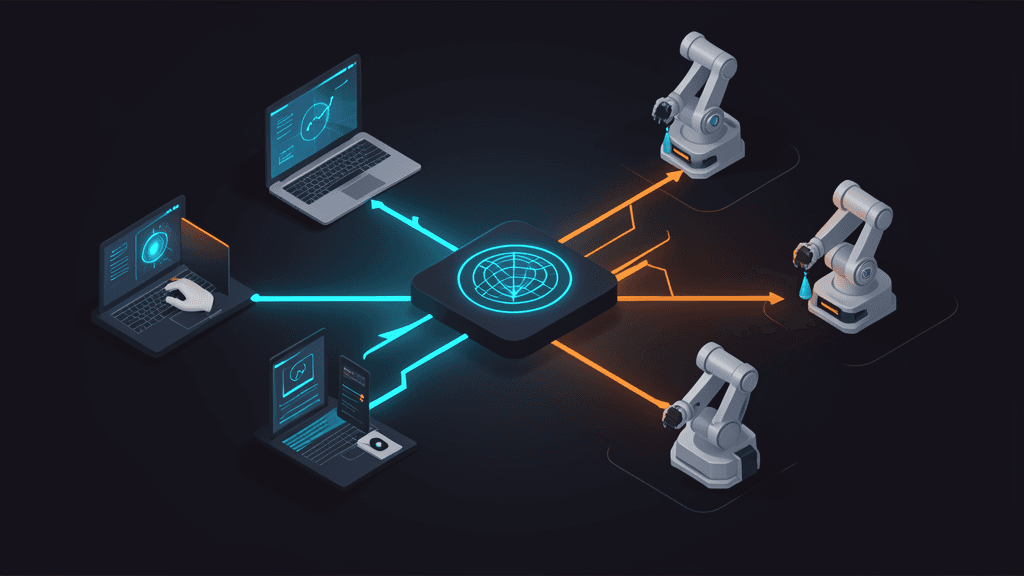
MiniMax has just launched H3, a general-purpose multimodal generation model that does something most video AI models don't: it unifies text, images, video, and audio into a single system.
The result is video generation at 2K resolution with native stereo sound — something that typically requires separate models for video and audio. And the pricing is aggressive: at 2K, H3 costs less than a third of mainstream alternatives. At 768p, it's under half the price of competitors' 720p output.
Let me walk through what H3 actually does differently and why it matters.
The Problem With Current Video AI Models
Most video generation tools today are fragmented. You need one model for text-to-image, another for image-to-video, a third for motion transfer, and separate systems for audio. Each has its own API, its own pricing, its own limitations.
This fragmentation constrains creative freedom. If you want to reference a specific camera movement from one video, use a character from an image, and sync vocals to audio from another source — you're juggling multiple tools with no unified context.
MiniMax recognized this limitation in designing H3. Their first principle was simple: unify and generalize across tasks.
How H3 Works Differently
Contextual Omni Representation
The core innovation is what MiniMax calls "Contextual Omni Representation." Instead of treating each modality as a separate task, H3 uses language as the universal bridge.
Here's an example from their blog: a prompt that says "Reference the Hitchcock camera movement from Video 1, have the character in Image 2 sing, with the vocals matching Audio 3."
H3 handles this by understanding the relationships between all three inputs — not just generating video, but理解ing how the camera movement, character, and audio relate to each other. The system describes these relationships in natural language, which acts as the generalizable interpreter.
This is fundamentally different from models that treat video, image, and audio as separate domains. Language becomes the common layer that binds everything together.
H3-VAE: Architecture Efficiency
H3 uses a completely redesigned tokenizer called H3-VAE. The company claims this delivers:
- 4x gain in effective sequence length — meaning the model can process longer videos without losing quality
- Native 2K resolution support — most competitors cap out at 1080p or require separate super-resolution steps
- Reduced training and inference costs — higher compression ratios directly translate to lower operational expenses
The VAE (Variational Autoencoder) is the component that compresses visual data into tokens the model can process. A better VAE means better reconstruction quality and more efficient learning.
H3-Omni Transformer
The architecture follows the same design philosophy: generality and efficiency. Notably, MiniMax deliberately set aside the Hailuo-02 architecture despite its advantages, because it would introduce unnecessary complexity for a model built around task generalization.
They separated understanding and generation workloads in the training architecture, which lifted training throughput by nearly 30%. This is a practical detail that matters — faster training means more iteration, better models, lower costs.
In-Context Regeneration
For 2K output, H3 doesn't use a dedicated super-resolution module. Instead, the base model regenerates its own low-resolution output in-context. This has two advantages:
- It maximizes reuse of the generative capability already built into H3
- It can draw on the original multimodal context again to recover details that traditional super-resolution would "guess" at — things like small text and fine detail that often get lost
Practical Applications
MiniMax has identified several commercial use cases where H3 shines:
- Film opening titles — precise control over text rendering and motion
- Product websites — consistent branding across video and audio
- Animated posters — accurate text placement and style transfer
- Advertising and e-commerce — instruction following and brand accuracy
The common thread is that these applications require precise, controllable multimodal generation. H3's strength is handling complex instructions that blend multiple modalities.
Pricing and Accessibility
Here's where H3 gets interesting from a business perspective:
| Resolution | H3 Price | Mainstream Competitors | |------------|----------|----------------------| | 2K | < 1/3 the cost | Baseline | | 768p | < 1/2 the cost | 720p pricing |
This pricing strategy suggests MiniMax is targeting commercial content creators who need volume at reasonable costs. If you're generating dozens of video assets for e-commerce or advertising, the savings compound quickly.
Open Source Plans
MiniMax has announced plans to open up the model weights "in the coming days," subject to applicable laws and regulations. The company has emphasized hardware compatibility since H3's earliest design stages, which suggests the open-source release will be practical for developers who want to build customized versions.
This is significant. Closed-source models have dominated video generation, with slower iteration and a less open ecosystem than fields like large language models. Opening the weights could accelerate compatibility with a broader range of AI hardware and enable community-driven improvements.
What's Next for H3
MiniMax has outlined several priorities for future versions:
- Stronger multimodal understanding — They plan to integrate capabilities from their M-series language models
- Scaling — The current model size leaves room for improvement across several capabilities
- Visual detail — Continued push toward higher resolutions and greater fidelity
The company's vision is clear: language, images, video, and audio are fundamental modalities of human experience. They're deeply interconnected. H3 is built on the principle that multimodal intelligence should be deeply grounded in language.
Why This Matters
H3 represents a shift in how we think about AI generation. Instead of specialized models for each task, we're moving toward general-purpose systems that understand context across modalities.
The implications are significant:
- Creative workflows become simpler — one tool instead of five
- Cost structures improve — lower prices, higher resolution, native audio
- Open ecosystems can develop — if weights are released as planned
- Hardware accessibility expands — deliberate compatibility focus from day one
For developers and creators in Malaysia and the broader ASEAN region, this is particularly relevant. Lower costs and open weights mean more teams can experiment with multimodal AI without enterprise budgets.
The Bottom Line
MiniMax H3 is impressive not because it does something entirely new, but because it does familiar things better and cheaper. 2K video with native stereo sound at a fraction of the cost of competitors? That's competitive pressure. Open source weights planned for release soon? That's ecosystem building. Unified multimodal understanding through language? That's the right architectural direction.
The real test will be how the open-source community responds once the weights drop. If H3 delivers on its promises, we could see a wave of customization and innovation that benefits everyone from large studios to independent creators.
I'll be watching this space closely.