Open Source LLMs vs Proprietary Models: Complete Comparison of US and China Developed AI
The open-source AI model race has shifted dramatically in 2026. Chinese labs like DeepSeek, Qwen (Alibaba), and Moonshot AI are now dominating benchmark leaderboards, while US companies like NVIDIA, Google, and Meta compete to maintain relevance. Meanwhile, proprietary models from OpenAI and Anthropic still lead in specific areas like safety and ecosystem integration.
This article provides a comprehensive comparison of all major open source LLMs from both US and China against proprietary alternatives like ChatGPT and Claude.
The 2026 Open Source LLM Landscape
Top Models by Country
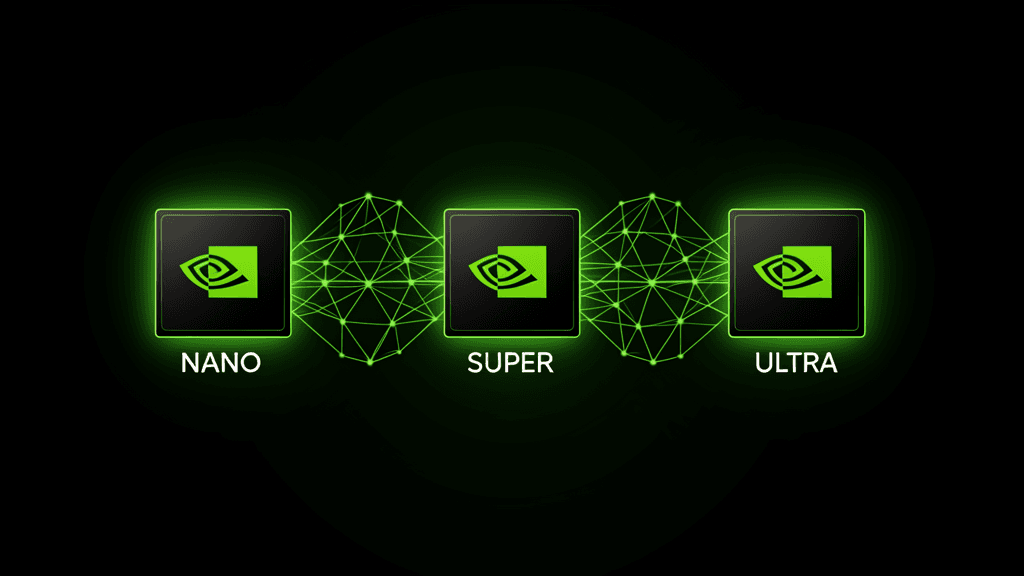
| Model | Company | Country | Parameters | License | Key Strength | |-------|---------|---------|------------|---------|--------------| | DeepSeek V4-Pro | DeepSeek | China | 1.6T (49B active) | MIT | Reasoning, coding, long context | | DeepSeek V4-Flash | DeepSeek | China | 284B (13B active) | MIT | High throughput, cost-effective | | Qwen 3.5 | Alibaba | China | 397B (17B active) | Apache 2.0 | Multilingual (201 languages) | | Kimi K2.6 | Moonshot AI | China | 1T (32B active) | Modified MIT | Agentic workflows, coding | | GLM-5.2 | Zhipu AI | China | 744B (40B active) | MIT | Strongest open-weight benchmarks | | Llama 4 Maverick | Meta | US | 400B (17B active) | Community | Multimodal, general purpose | | Gemma 4 31B | Google | US | 31B dense | Apache 2.0 | Local deployment, efficiency | | Nemotron 3 Ultra | NVIDIA | US | 550B (55B active) | OpenMDW | Agent systems, tool calling | | gpt-oss-120b | OpenAI | US | 117B dense | Apache 2.0 | Speed, API compatibility |
Benchmark Comparison: Open vs Proprietary
Reasoning & Knowledge (GPQA Diamond)
| Model | GPQA Score | Context | License | |-------|------------|---------|---------| | Kimi K3 (pending weights) | 93.5% | 1M tokens | TBD | | GLM-5.2 | 91.2% | 1M tokens | MIT | | MiniMax M3 | 92.9% | 512K tokens | Open weights | | Qwen 3.5 | 88.4% | 262K tokens | Apache 2.0 | | DeepSeek V4-Pro | 90.1% | 1M tokens | MIT | | ChatGPT (Proprietary) | 92.6% | 128K tokens | Closed | | Claude Opus 4.8 | 92.0% | 200K tokens | Closed |
Key Insight: Open source models now match or exceed proprietary models on reasoning benchmarks. GLM-5.2's 91.2% GPQA score rivals Claude Opus at 92.0%, while DeepSeek V4-Pro achieves 90.1%.
Coding Performance (SWE-bench Verified)
| Model | SWE-bench Score | LiveCodeBench | License | |-------|-----------------|---------------|---------| | GLM-5.2 | 62.3% | – | MIT | | Kimi K2.7 Code | 61.9% | – | Modified MIT | | Kimi K2.5 | 76.8% | 85.0% | Modified MIT | | DeepSeek V4-Pro | 80.6% | 93.5% | MIT | | DeepSeek V4-Flash | 79.0% | 91.6% | MIT | | Llama 4 Maverick | 65.0% | 43.4% | Community | | Claude Sonnet 4.5 | 68.0% | 64.0% | Closed | | GPT-5 | 55.3% | 87.0% | Closed |
Key Insight: DeepSeek V4-Pro leads open source coding at 80.6% on SWE-bench, surpassing Claude Sonnet's 68.0%. However, proprietary models still show strengths in certain coding benchmarks.
Math & Reasoning (AIME 2025)
| Model | AIME Score | MATH-500 | License | |-------|------------|----------|---------| | DeepSeek R1 | 87.5% | 97.3% | MIT | | GLM-5.2 | 99.2% | – | MIT | | Step-3.5-Flash | 99.8% | – | Apache 2.0 | | Nemotron Super 49B | 82.7% | 97.4% | NVIDIA Open | | ChatGPT (Proprietary) | 99.6% | – | Closed | | Claude (Proprietary) | 100% | – | Closed |
Key Insight: For pure mathematical reasoning, proprietary models like Claude and ChatGPT still hold an edge. However, open models like DeepSeek R1 and GLM-5.2 are closing the gap significantly.
Architecture Comparison: What Makes These Models Different?
MoE (Mixture of Experts) vs Dense Models
MoE Models (Most open leaders):
- DeepSeek V4-Pro: 1.6T total, 49B active
- Kimi K2.6: 1T total, 32B active
- Qwen 3.5: 397B total, 17B active
- Llama 4 Maverick: 400B total, 17B active
Dense Models:
- Gemma 4 31B: 31B total, 31B active
- Nemotron Ultra 253B: 253B total, 253B active
- gpt-oss-120b: 117B total, 117B active
Trade-off: MoE models activate only a subset of parameters per token, enabling larger total capacity while maintaining inference efficiency. Dense models are simpler but scale differently.
Context Window: The 1M Token Revolution
Most 2026 open models support 1 million token context windows:
- DeepSeek V4-Pro/Flash: 1M tokens
- Kimi K2.6/K3: 1M-10M tokens
- GLM-5.2: 1M tokens
- Nemotron 3 series: 1M tokens
- Llama 4 Scout: 10M tokens (record)
Proprietary models lag behind:
- ChatGPT: 128K-200K tokens
- Claude: 200K tokens
Implication: Open source models now lead in context length, enabling analysis of entire codebases, long documents, and extended conversations.
License Comparison: Commercial Use Matters
| License | Models | Commercial Use | Key Restrictions | |---------|--------|----------------|------------------| | Apache 2.0 | Qwen, Gemma, Mistral | ✅ Unrestricted | None | | MIT | DeepSeek, GLM, Phi | ✅ Unrestricted | None | | Modified MIT | Kimi K2.5/K3 | ✅ Below 100M MAU | Attribution required above threshold | | Llama Community | Llama 4 | ✅ Up to 700M MAU | Above: Meta license needed | | NVIDIA Open | Nemotron | ✅ With conditions | NVIDIA usage terms | | CC-BY-NC | Command R+ | ❌ Non-commercial | Research/personal only |
Key Insight: For commercial SaaS products, Apache 2.0 and MIT licenses are safest. DeepSeek, Qwen, and GLM all offer permissive licenses. Llama's 700M MAU cap is restrictive for large platforms.
When to Use Open Source vs Proprietary Models
Choose Open Source (DeepSeek, Qwen, GLM, etc.) When:
- Data privacy is critical (self-host on your infrastructure)
- Cost efficiency matters (API costs 10-100x cheaper than ChatGPT)
- Customization needed (fine-tune on your domain data)
- Long context required (1M+ tokens vs 128K-200K)
- Regulatory compliance (GDPR, data residency)
- Vendor independence (no API lock-in)
Choose Proprietary (ChatGPT, Claude) When:
- Safety/reliability is paramount (better safety training)
- Ecosystem integration needed (ChatGPT plugins, Claude Projects)
- Simple deployment (no infrastructure management)
- Proprietary features required (GPT-4.5 image generation, Claude Code)
- Enterprise support needed (SLAs, compliance certifications)
The China vs US Open Source AI Race
Chinese Labs Leading
- DeepSeek: 102,000+ GitHub stars, MIT license, strongest reasoning
- Qwen (Alibaba): 27,000+ GitHub stars, most downloaded family, multilingual
- Kimi (Moonshot AI): 5,000+ stars, agent swarm capabilities
- GLM (Zhipu AI): Strongest benchmarks among open models
US Labs Competing
- NVIDIA: Nemotron family, optimized for GPU inference, enterprise focus
- Google: Gemma family, efficient local deployment, Apache 2.0
- Meta: Llama family, broad ecosystem, multimodal
- OpenAI: gpt-oss-120b (Apache 2.0), but limited vs Chinese models
Why China Leads in Open Source
- Government support for AI sovereignty
- Lower training costs (H800 GPUs before sanctions)
- Fast iteration (DeepSeek trained R1 for $5.6M vs OpenAI's billions)
- Open culture (MIT/Apache licenses preferred over proprietary)
- Large talent pool (AI researchers from top universities)
Real-World Performance: What Users Report
Customer Success Stories
Airbnb: "Relying a lot on Alibaba's Qwen model because it is fast, cheap, and performant enough."
- Uses Qwen for search, recommendations, and internal tools
- Cost savings: ~90% vs GPT-4 API
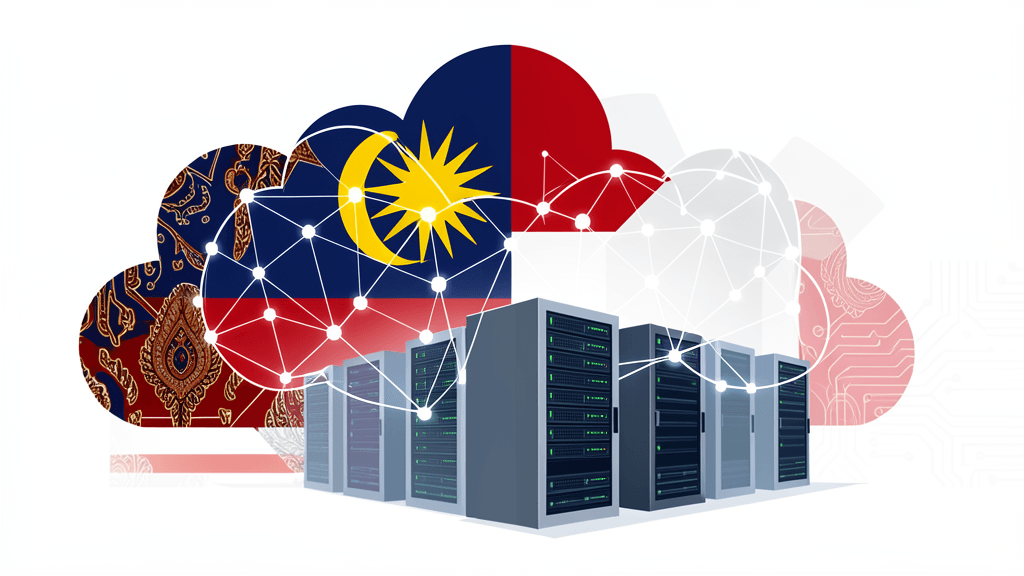
ILMU Console (YTL AI Labs): Uses NVIDIA Nemotron-3-Super for Malaysian AI services
- Local data residency (Malaysia)
- Understands Manglish, Bahasa Malaysia, local context
- Cost: RM 25-50/month vs $0.02-0.10 per 1K tokens for OpenAI
Chinese Financial Firms: Adopting DeepSeek V4 for trading analysis
- 1M token context for entire financial reports
- Reasoning performance matches GPT-4
- Self-hosted for data privacy
Enterprise Adoption Patterns
| Industry | Preferred Open Models | Proprietary Use Cases | |----------|----------------------|----------------------| | Finance | DeepSeek V4, Qwen | Risk analysis, compliance | | Healthcare | Qwen, Nemotron | Diagnostic support | | Legal | GLM, DeepSeek | Contract analysis | | E-commerce | Qwen, Llama | Product descriptions, search | | Tech/SaaS | All open models | Developer tools, APIs |
Cost Comparison: API vs Self-Hosted
OpenAI GPT-4o vs DeepSeek V4 vs Qwen 3.5
| Model | Input (per 1M) | Output (per 1M) | Context | License | |-------|---------------|-----------------|---------|---------| | GPT-4o | $2.50 | $10.00 | 128K | Closed | | GPT-4o mini | $0.15 | $0.60 | 128K | Closed | | DeepSeek V4-Pro | $0.27 | $1.10 | 1M | MIT | | DeepSeek V4-Flash | $0.14 | $0.55 | 1M | MIT | | Qwen 3.5 | $0.10 | $0.40 | 262K | Apache 2.0 | | GLM-5.2 | $0.20 | $0.80 | 1M | MIT |
Self-hosted costs (10x H100 cluster):
- DeepSeek V4-Pro: ~$2,000/month electricity + hardware amortization
- Effective cost: ~$0.05 per 1M tokens at scale
Conclusion: Open source models are 10-50x cheaper than proprietary APIs at scale. For high-volume applications, self-hosting pays for itself quickly.
How to Choose: Decision Framework
Need maximum quality regardless of cost?
  → ChatGPT or Claude (proprietary)

Need best open source for reasoning/coding?
  → DeepSeek V4-Pro or GLM-5.2

Need multilingual support?
  → Qwen 3.5 (201 languages)

Need local deployment on consumer hardware?
  → Gemma 4 12B-27B or Phi-4 14B

Need agent/workflow capabilities?
  → Kimi K2.5/K3 or Nemotron 3 Super

Need Apache 2.0 license for commercial use?
  → Qwen, Gemma, Mistral

Need MIT license (most permissive)?
  → DeepSeek, GLM, Phi

Need 1M+ token context?
  → DeepSeek V4, Kimi K3, GLM-5.2, Nemotron
The Future of Open Source LLMs
Trends to Watch in 2026-2027
-
Homogeneity Risk: Many models now use similar architectures (MoE + MLA). Innovation may slow without architectural breakthroughs.
-
US Response: OpenAI's gpt-oss-120b and Google's efforts signal US pushback, but Chinese models still lead on benchmarks.
-
Specialization: Models are branching into domains (coding, reasoning, multimodal) rather than one-size-fits-all.
-
Efficiency Gains: Active parameters staying constant (~17-40B) while total parameters grow (1T-2.8T). This suggests better routing algorithms.
-
Agentic AI: Open models are being optimized for tool calling, function execution, and multi-step reasoning — not just chat.
Predictions
- By Q4 2026: Open source models will match proprietary on most benchmarks (coding, reasoning, knowledge)
- By 2027: Proprietary models will differentiate on safety, ecosystem, and user experience
- Open source will win on: Cost, customization, privacy, and context length
- Proprietary will win on: Reliability, support, and integrated features
FAQ: Open Source LLM Comparison
What is the best open source LLM in 2026?
GLM-5.2 leads on benchmarks (91.2% GPQA, 99.2% AIME), while DeepSeek V4-Pro excels in coding (80.6% SWE-bench). For commercial use, Qwen 3.5 offers Apache 2.0 licensing.
Can open source models replace ChatGPT?
For many use cases, yes. DeepSeek V4-Pro and GLM-5.2 match GPT-4o on reasoning and coding at a fraction of the cost. However, ChatGPT still leads on safety training and ecosystem integration.
Which open source LLM is best for coding?
DeepSeek V4-Pro (80.6% SWE-bench) and Kimi K2.7 Code (61.9%) lead open source coding. Both offer MIT or modified MIT licenses.
Are Chinese open source models safe to use?
MIT and Apache 2.0 licensed models like DeepSeek and Qwen are generally safe for commercial use. However, some organizations avoid Chinese models due to compliance concerns. US models (Gemma, Llama) may be preferable for government/regulated industries.
How much does it cost to run open source LLMs?
Self-hosting DeepSeek V4-Pro requires ~$2,000-5,000/month for a 10x H100 cluster. API costs are 10-50x cheaper than OpenAI (~$0.14-1.10 per 1M tokens vs $2.50-10.00).
Conclusion
The open source LLM landscape in 2026 is dominated by Chinese labs (DeepSeek, Qwen, Kimi, GLM) that offer superior benchmarks, permissive licenses, and 10-100x cost savings compared to proprietary models. US models (Nemotron, Gemma, Llama) compete on ecosystem and commercial support.
For most organizations, open source models are now viable replacements for ChatGPT and Claude — especially for coding, reasoning, and high-volume applications. The choice depends on your specific needs:
- Cost-sensitive: DeepSeek or Qwen (Apache 2.0/MIT licenses)
- Enterprise support: Llama or Nemotron (US-based, compliance-friendly)
- Maximum capability: GLM-5.2 or DeepSeek V4-Pro (best benchmarks)
The era of proprietary AI monopolies is ending. Open source models are now faster, cheaper, and more capable than ever.
Last updated: August 2026. Benchmarks sourced from Onyx Leaderboard, Thunder Compute, and official model releases.